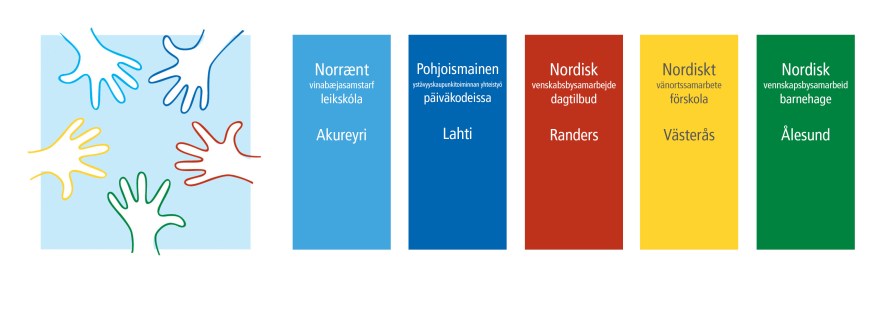
The steering group has decided on the theme for the Nordic Network Days in Ålesund in 2025:
Strong foundation for the next generation – teachers and children.
Where and when
Thursday and Friday September 25-26 2025 in Ålesund, Norway.

Nordiskt samarbete i förskolan med vänorterna Akureyri, Lahtis, Randers, Västerås och Ålesund
The steering group has decided on the theme for the Nordic Network Days in Ålesund in 2025:
Strong foundation for the next generation – teachers and children.
Thursday and Friday September 25-26 2025 in Ålesund, Norway.
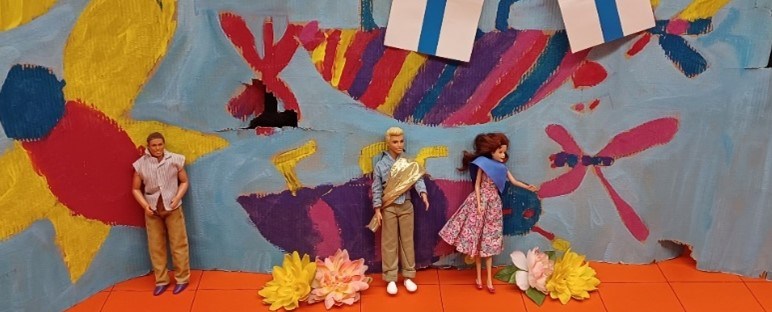
(Photo: Tiia Naams)
Finland’s Independence Day, Finland’s national day, is celebrated in honor of Finland’s independence on 6th of December, 1917. Independence Day is a dignified celebration that involves remembering the war and the fallen. The day is associated with many annual traditions, such as the Independence Day reception of the President of the Republic since the time of the first President. Also parades and torchlight processions are held in many cities and communities, and a movie called the Unknown Soldier is shown on television as a tradition.
The 6th of December has been celebrated as Independence Day since 1919, when it became a public holiday. It became a paid holiday in 1929 and a public holiday in 1937. Independence Day is flag day.
Suomen itsenäisyyspäivä – Wikipedia
Many people watch the Independence Day reception of the President from TV and eat traditional Finnish dinner. It is a tradition to light two candles with blue and white color, to the window for the evening. There is also celebration receptions for the residents held in many cities and municipalities, and Lahti has one too.
In early childhood education we celebrate Independence Day on the day before that, Thursday 5th of December.
Some daycare centers have their own Independence Day receptions and a ballroom where everyone, children and personnel, dress up finely. They might even vote a president couple from among the children for the day. Having some kind of sing-along gatherings all together are also popular way of celebrating the Independence Day in Finnish daycare centres.
Often in we put on some decoration light strips and LED candles around the daycare centre and create nice and calm atmosphere. Many groups make hand crafts about the Independence Day, for example Finnish flags, maps of Finland or Independence Day candles, and decorate the walls.
Here in Lahti, we have also had Independence Day reception for Bee-Bot coding toys! They had a president couple from among the Barbie dolls, nice lightning, grafted Finland’s flags and got to wear beautiful children’s crafted gowns on them. Children put them to dance by giving commands to turn around again and again.
Here is a link to a song from Mimmit, which tells about Finland in Finnish and Swedish.
Visste du at islandske barnehagelærarar har 10 timar plantid pr veke…? Eller at Finland har barnehagar som er open 24/7…? Barnehagetradisjonen i Norden har mykje til felles, men der er også mykje som er ulikt. Hausten 2023 reiste 10 barnehagefolk frå Ålesund til Akureyri på Island for å lære noko om både likskapar og ulikskapar mellom dei nordiske landegrensene.
Målet for turen var vennskapsby- konferansen «Ein barnehage for alle» i regi av NORSAMBY. Dette er eit nordisk samarbeid for barnehagar der vennskapsbyane Akureyri (Island), Lahtis (Finland), Randers (Danmark), Västerås (Sverige) og Ålesund (Norge) er med. Samarbeidet starta i Randers i 2001, og er unikt i barnehagesamanheng. Kvart år sidan oppstart har det blitt arrangert barnehagekonferansar på omgang mellom byane. Det nordiske samarbeidet har som mål å utvikle og styrke den nordiske barnehagetradisjonen, ved å fokusere på pedagogiske satsingsområde i dei ulike landa. Det er også eit mål at deltakarane får dele erfaring, kunnskap og kompetanse med kvarandre. Slik kan ein bygge og vidareutvikle den sterke barnehagetradisjon i Norden. (norsamby.com). Den nordiske barnehagemodellen er internasjonalt anerkjent for si heilheitlege tilnærming til barn si utvikling.
Konferansen i regi av Norsamby Y tilbyr ulike forelesningar, og på Island heldt Svava Björk Mörk hovudforelesninga med tittelen: «Quality of learning – Learning environment for all children”. Vi besøkte også barnehagar under opphaldet, i tillegg deltok vi på Workshop av og med barnehagepersonale frå dei nordiske landa.
Dette er ein tekst som bygger på nokre av dei erfaringane og opplevingane vi gjorde oss på studieturen til Akureyri. Det er også gjort ei uformell innsamling av nokre «barnehagefakta» frå styregruppa i Norsamby. Innhaldet i teksten kan ikkje generaliserast til «sannheiter», men den er meir ei samansetning av ulike erfaringar og informasjonsutvekslingar. Når dei ulike barnehagane blir omtala, blir det for enkelheitsskuld referert til landet, og ikkje til dei einskilde byane eller barnehagane.
Barnehagen på Island (Akureyri) får ein kort omtale i starten av teksten, før det blir vist til likskapar og ulikskapar mellom alle dei nordiske landa sine barnehagar i høve opningstider, foreldrebetaling, utdanning, tal på pedagogar, bemanningsnorm og plantid. Det blir også peika på ulike innfallsvinklar til temaet for konferansen; Ein barnehage for alle. Avslutningsvis vert det stilt nokre spørsmål til vidare refleksjon.
Les hele artikkelen her, Likskap og ulikskap i dei nordiske barnehagane, på norsk
Did you know that Icelandic kindergarten teachers have 10 hours of planning time per week…? Or that Finland has kindergartens that are open 24/7…? The kindergarten tradition in the Nordic countries has much in common, but there is also much that is different. In the autumn of 2023, 10 kindergarten staff traveled from Ålesund to Akureyri in Iceland to learn something about both similarities and differences between the Nordic borders.
The goal of the trip was the twinning city conference ”A kindergarten for all” under the auspices of NORSAMBY. This is a Nordic collaboration for kindergartens where the twin cities of Akureyri (Iceland), Lahtis (Finland), Randers (Denmark), Västerås (Sweden) and Ålesund (Norway) are involved. The collaboration started in Randers in 2001, and is unique in a kindergarten context. Every year since its inception, nursery school conferences have been organized between the cities. The Nordic cooperation aims to develop and strengthen the Nordic kindergarten tradition, by focusing on pedagogical areas of focus in the various countries. It is also a goal that the participants get to share experience, knowledge and expertise with each other. This is how the strong nursery tradition in the Nordics can be built and further developed. (norsamby.com). The Nordic kindergarten model is internationally recognized for its holistic approach to children’s development.
The conference organized by Norsamby offers various lectures, and in Iceland Svava Björk Mörk gave the main lecture with the title: ”Quality of learning – Learning environment for all children”. We visited kindergartens during our stay, and we also took part in a workshop with kindergarten staff from the Nordic countries.
This is a text based on some of the experiences we had on the study trip to Akureyri. An informal collection of some ”nursery facts” has also been made from the steering group in Norsamby. The content of the text cannot be generalized to ”truths”, but is more a composition of various experiences and exchanges of information. When the various kindergartens are discussed, for the sake of simplicity, reference is made to the country, and not to the individual cities or kindergartens.
The kindergarten in Iceland (Akureyri) receives a brief mention at the start of the text, before showing similarities and differences between all the Nordic countries kindergartens in relation to opening hours, parental payment, education, number of pedagogues, staffing standards and planning time. Different approaches to the theme of the conference are also pointed out; A kindergarten for everyone. In conclusion, some questions are asked for further reflection.

Icelandic National Day (Icelandic: Þjóðhátíðardagurinn, the day of the nation’s celebration) is an annual holiday in Iceland which commemorates the foundation of The Republic of Iceland on 17 June 1944. This date also marks the end of Iceland’s centuries old ties with Denmark. The date was chosen to coincide with the birthday of Jón Sigurðsson, a major figure of Icelandic culture and the leader of the 19th century Icelandic independence movement. Today, Icelanders celebrate this holiday on a national scale. The celebration traditionally takes the form of parades through each city, town, and village, usually with a brass band leading the way. Riders on Icelandic horses often precede the brass band, and a flag-bearing troop from the Icelandic scout movement traditionally follows the band. After the parade speeches are held out in the open, including one from Fjallkonan (the woman of the mountain), dressed in Skautbúningur, who recites a poem. She represents the fierce spirit of the Icelandic nation and of Icelandic nature. In many ways this recalls the period of romanticism that reigned when the first steps toward independence were taken. After the public speeches are over, less formal celebrations ensue, usually including a variety of musical performances.
This year our national holiday, 17 of june, was on Monday. Usually we celebrate in the preschools the Friday before if it connects to a weekend.
Here in Iðavöllur we had our summer festival in the week before, so we kind of put those two things together this year. We had the parents for a visit in the end of the day. The children got facepaint, we ate some ice cream, had a water and soap bubble station, a carpenters station, rock painting station and had some horses so the children could go on hoursback.
It was a lot of fun and luckily the weather was finally nice for the day. The week before we had very cold weather and snowstorms for a week, which the children did not like very much – and the adults even less! Two girls at our school were playing by the window and looked out into the snowstorm. One of them said; is the summer over so soon??
At Kiðagil kindergarten we always celebrate our national holiday with a big parade. We use the days before June 17 to prepare for the festival. The students either made flags or crowns in the colors of the flag. On the morning of the National Day, everyone shows up in their best polish. After breakfast, the whole school gathers outside, with their flags and their crowns, and the parade continues around the neighborhood. We bring speakers and sing Icelandic national songs. Our neighbors really like to hear and see us, and many faces come out the window to watch us. When we get back to the kindergarten, it’s lunch and rest after a wonderful morning.
Gleðilegan sautjánda júní.
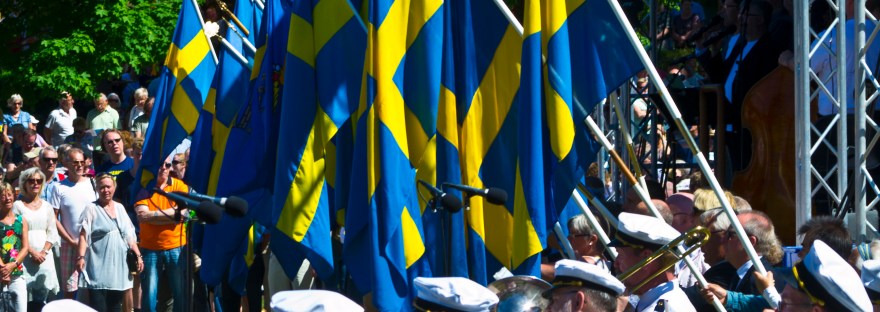
Foto: Mostphotos
Sveriges nationaldag och svenska flaggans dag firas den 6 juni varje år och är en helgdag i Sverige. Tidigare firades 6 juni enbart som ”svenska flaggans dag” och det var först 1983 som dagen även fick status som nationaldag. Sedan 1996 är nationaldagen en salutdag, och från och med 2005 är nationaldagen även en helgdag.
Nationaldagen firas dels till minne av att Gustav Vasa valdes till Sveriges kung den 6 juni 1523, dels till minne av att 1809 års regeringsform (som gällde fram till 1974 års regeringsform) skrevs under den 6 juni 1809.
Den 6 juni 1523 väljs Gustav Vasa till kung i Sverige. Det medförde att Sverige bröt sig ur Kalmarunionen med Danmark och Norge och åter blev ett självständigt land med en egen kung och en ny kunglig dynasti, Vasaätten. Den 6 juni 1809 skrev riksdagen under den regeringsform som lade grunden för det moderna Sverige.
Ända sedan 1893 har nationaldagen firats traditionsenligt på Skansen den 6 juni. Vi firar i närvaro av kungafamiljen och med musik, högtidstal och utdelning av fanor.
I de flesta län och kommuner firas nationaldagen med lokala evenemang och festligheter. Många kommuner har också en särskild ceremoni för att välkomna nya svenska medborgare och alla nya invånare i kommunen.
I Västerås firas nationaldagen traditionsenligt på Djäkneberget. Firandet inleds i stadshuset med välkomstceremoni för nyblivna svenska medborgare på förmiddagen. Därefter går den traditionsenliga fanborgen från Fiskartorget klockan 12.00, och marscherar tillsammans med Västerås Stadsmusikkår hela vägen upp till Djäkneberget. Västerås Youth Marching Band ansluter från Växhuset. Firandet avslutas på Djäkenberget klockan 15.30.
Vad kan man äta på Sveriges nationaldag? Något som blivit en tradition för nationaldagen är färskpotatis och sill, som är gamla traditionella råvaror. Dessa råvaror har för övrigt också egna dagar vid namn färskpotatisens och sillens dag.
Nationaldagsfirande på Djäkneberget – Västerås (vasteras.se)
NATIONALDAGEN HISTORIA – Stiftelsen Sveriges Nationaldag
Sveriges nationaldag | Lär dig mer om högtider | Nordiska museet

17. mai er Norges nasjonaldag der vi feirer grunnloven fra 1814. Dagen er fylt med feiring, glede og nasjonalisme over hele landet.
I motsetning til noen utenlandske nasjonaldager, markeres ikke 17. mai med militærparader, men med lokale barnetog der musikkorps og skolebarn marsjerer sammen.
Dagen er en folkelig festdag som starter med en salutt, flaggheising og 17. mai frokoster. I Ålesund går barnetoget gjennom byen kl. 10 med korpsmusikk, norskeflagg og festkledde mennesker. Mange av dem iført bunad, en festdrakt fra ulike deler av Norge. Barna går sammen med klassen eller barnehagen sin, ofte med en fane for å markere tilhørigheten. Etter bytoget arrangeres det lokale barnetog i de ulike skolekretsene.
I etterkant av de lokale barnetogene arrangeres det leker på skolene der barn og voksne samles utendørs i vårværet. Foreldrene er vanligvis ansvarlige gjennom deltakelse i de kommunale 17. mai-komiteene og FAU (Foreldrenes arbeidsutvalg ved skolene). Aktivitetene inkluderer sekkeløp, potetløp, trehjulssykling, ballkasting og annet, ofte med små premier. Det selges også is, pølser og kaker på skoleområdet. Det er vanlig å pynte skolegårdene og anleggene med bjørkeris, faner og norske flagg.
Etterpå samles folk vanligvis til familie- og vennesammenkomster, hvor det serveres typiske norske retter som spekemat, rømmegrøt og grillmat om været tillater det.
Uansett hvor du er i landet, vil du kunne føle den spesielle atmosfæren av nasjonal stolthet og fellesskap som preger denne dagen. Det er virkelig en dag for å feire alt som er norsk og verdsette den lange historien og kulturen vår.
English
May 17th is Norway’s National Day, where we celebrate the Constitution of 1814. The day is filled with celebration, joy, and nationalism across the country.
In contrast to some foreign national days, May 17th is not marked by military parades, but by local children’s parades where marching bands and schoolchildren march together.
The day is a popular holiday that begins with a salute, flag-raising, and May 17th breakfasts. In Ålesund, the children’s parade goes through the city at 10 a.m. with brass band music, Norwegian flags, and people dressed in festive attire. Many of them wear bunads, traditional costumes from various parts of Norway. Children walk together with their classes or kindergartens, often carrying a banner to signify their affiliation. After the city parade, local children’s parades are organized in different school districts.
Following the local children’s parades, games are arranged at the schools where children and adults gather outdoors in the spring weather. Parents are usually responsible through participation in the municipal May 17th committees and the Parents’ Working Committee at the schools (FAU). Activities include sack races, potato races, tricycle races, ball throwing, and more, often with small prizes. Ice cream, hot dogs, and cakes are also sold on the school premises. It is common to decorate the school yards and facilities with birch branches, banners, and Norwegian flags.
Afterward, people typically gather for family and friend gatherings, where typical Norwegian dishes such as cured meats, sour cream porridge, and barbecue if the weather permits, are served.
Wherever you are in the country, you will be able to feel the special atmosphere of national pride and solidarity that characterizes this day. It’s truly a day to celebrate everything Norwegian and to appreciate our long history and culture.
Den 23 mars är det Nordens dag, då vi firar världens äldsta regionalpolitiska samarbete. Det uppmärksammas på olika sätt runt om i Norden.
Den 23. marts er det Nordens dag, hvor vi fejrer det ældste regionale politiske samarbejde i verden. I hele uge 12 vil vi have arrangementer i de nordiske lande, som alle omhandler vigtige emner for regionen, skriver Nordiskt samarbete på sin webbplats. Läs mer på länken nedan.
Nordens dag 2024 | Nordiskt samarbete
”Norden kan stoltsera med ett av de äldsta regionala samarbetena i världen. Det är ingen tillfällighet att just Norden ligger i framkant inom många områden som hållbarhet, konkurrenskraft och innovation. Hundra år av samarbete över de nordiska gränserna har bidragit till att forma våra starka välfärdssamhällen, och ger oss goda förutsättningar att möta framtida utmaningar gemensamt.” Citatet är hämtat från en artikel i Vlt den 22 mars. Läs hela artikeln på länken nedan.
Samarbete i Norden är viktigt för oss i Västerås – VLT
Hurra för oss i Norden!

Anna-Maria Barnelius and Malin Jansson, two principals from Västerås, were curious about how principals in preschools in Akureyri work. They traveled to Akureyri in September 2023 to exchange for a few days with Anna Lilja Sævarsdóttir, principal of Leikskólinn Iðavöllur, and Inda Björk Gunnarsdóttir, principal of Leikskólinn Kiðagil. They wanted to see similarities and differences in terms of leadership between the twin cities.
We visited two preschools
We visited two preschools and we got to participate in different classes and was able to observe the teachers in class. We also had the opportunity to participate and observe a special teacher who was working with a child with autism. And we also got to observe and interview two principals.
We got to look at the environments at the different preschools and the outdoors environments.
We discovered that Iceland map the children carefully
We discovered that in Iceland they map the individual children very carefully. It is a big difference to how we work in Sweden. It also has a curriculum that comes from the state, but the preschools also have their own plans that the principal controls.
Transitions: They have good contact with the school. You make a visit a month before the children are 5-year-olds, eat a snack at school, go to the library, meet last year’s children, meet the teachers who will receive them. They have access to the gymnasium, where they get to know the premises. Parents can choose a school in the area they want to place their child. The headmaster of the school can say yes or no to parents and the families living nearby go first.
When a guardian declines they must sign a paper
When a guardian is offered interventions and declines, they must sign a paper showing that they have declined the intervention. This is saved and can be retrieved by the receiving principal at the school or new preschool. This makes it easier to catch children who need special interventions and that you don’t have to start from scratch when the child starts in a new school form.
We also learned that there is a new law in Iceland which ensures that families cannot avoid receiving support from, for example, social services. It is the same confidentiality that applies throughout the school period.
It was very positive to learn more
It was very positive to meet two principals and to learn more about Iceland’s culture, traditions, food, education system, reception of new arrivals and much more. We can see that in Iceland they work very structured with children’s learning and development.
Both of us were impressed of how they work with putting the children’s well-being and learning in the front. All the teachers, principals and even the municipality seems to work together and that is wonderful to see.
Thank you so much
Thank you so much for hosting us and teaching us more about Icelandic preschool system and your culture! We felt very welcomed.
Anna-Maria Barnelius and Malin Jansson
Principals, Västerås stad Skolverksamheter
Under cirka 18 månader har vi och världen levt med coronapandemin. I slutet av september tog Sverige bort många restriktioner. Nu skulle livet och vardagen bli lite mer normal igen. En dag i oktober träffade jag två rektorer för att samtala om hur pandemin har påverkat barnen och föräldrarna i förskolan. Vi satte på oss föräldrarnas glasögon och funderade över vad som har fungerat bra och vad som har fungerat mindre bra samt vad vi tar med oss framåt.
Vad har fungerat bra?
– Vi har hittat bra rutiner vid hämtning och lämning för att hålla avstånd och undvika smittspridning. Vi har ringklockor på varje avdelning. Pedagogerna går ut i hallen och möter föräldrarna och barnen. Många föräldrar har sagt att det gör hämtningen och lämningen lättare och att det ger en bra möjlighet till att få och lämna information. Det blir ett kort men bra och personligt möte i hallen, säger Monica Rosén, rektor Gransångarens förskola och Knattekompaniets förskola.
– Hämtningen och lämningen blir smidigare för alla. Det skapar också lugn på avdelningen när barnen inte blir störda i sin lek av föräldrar som kommer och går, berättar Monica Rosén vidare.
– Jag instämmer. De nya rutinerna har varit uppskattade hos föräldrarna. De har upplevt att vi vill att deras barn ska må bra och att våra rutiner har bidragit till att minska smittspridningen i samhället, säger Erica Carlsson, rektor Erikslunds förskola och Norra Vallby förskola.
– En stor del av undervisningen har skett utomhus och även det har gjort att barnen och pedagogerna har varit friskare, berättar Erica Carlsson vidare.
Vad har fungerat mindre bra?
– Vi har haft många diskussioner om sjuka barn med föräldrar. Det är svårt för pedagogerna att avgöra vilka vi ska skicka hem och vissa barn är lite snuviga jämt, säger Monica Rosén.
– Många föräldrar är också rädda och oroliga över att vara hemma ofta med sjuka barn, då de kanske inte har en fast anställning och deras chefer klagar, berättar Monica Rosén vidare.
– Även här håller jag med. Vissa föräldrar har haft svårt att förstå Folkhälsomyndighetens och Smittskyddsenhetens rekommendationer om symtom på covid-19. Pedagogerna har lagt mycket kraft och tid på att förklara och motivera föräldrar att följa rekommendationerna, säger Erica Carlsson.
Vad tar vi med oss framåt?
Ta hand om er och varandra, så ses vi snart igen!
Hälsar vi från Västerås
genom Erica, Monica och Monika

For vår lille familieboble (med mamma, pappa og tre gutter) har ett og et halv år med pandemi vært både utfordrende og frustrerende, men samtidig en merkelig, fin tid fylt av samhold og gode opplevelser. Med èn forelder i samfunnskritisk stilling, èn forelder på hjemmekontor, to gutter med periodevis hjemmeskole og minstemann i barnehage ble hverdagen endret, men kanskje ikke like dramatisk som for mange andre. Med unntak av flere perioder i isolasjon og karantene på grunn av smitte eller mistanke om smitte har den største forskjellen kanskje bestått av bedre tid. Og bedre tid er jo noe vi som familie ikke har vondt av. Lange perioder uten fritidsaktiviteter, ingen reiser for hverken store eller små, færre arrangementer, turneringer og dugnader har vi egentlig opplevd som ganske så positivt (kanskje fordi aktivitetsnivået var for høyt i utgangspunktet). Sosialt samvær med familie og venner har vi savnet, men vi er heldige og har mange av våre nærmeste her i byen og i nærområdet.
I en unormal hverdag har barnehagen for oss langt på vei representert det normale. Korte perioder med nedstenging, litt kortere åpningstid, noen nye rutiner, men i det store og det hele ganske så normalt. Vi vet at det ligger en stor innsats bak en åpen og fungerende barnehage under en pandemi, men vår subjektive opplevelse utenfra og som foreldre er utelukkende positiv;
Selv om vi har holdt mer avstand, er det kanskje riktig å si at vi har kommet nærmere hverandre på mange måter. Vi har i snart ti år kommunisert og samhandlet godt og tett med barnehagen om våre barn, men vi føler nesten dette samarbeidet har blitt enda bedre under pandemien. I tillegg har vi opplevd en omsorg og innsats fra personalet som går langt ut over det man kan forvente. Digital eventyrstund og bursdagskrone levert utenfor døra når bursdagen måtte feires i isolasjon, det står ikke i noen stillingsinstruks.
Her hos oss er vi ganske enige om at pandemi og småbarnsliv fungerer ganske så bra. Ikke går vi ut på byen, ikke drar vi på helgetur til utlandet, og aktivitetene er uansett knyttet til barna. Samtidig så vet vi etter flere perioder med hjemmeskole at en stengt barnehage ville endret dette ganske så mye. Frustrasjonsnivået hos både store og små ville vært et helt annet uten den daglige dosen lek, samvær og rutiner i barnehagen.
Nå stiger smittetallene igjen, og vi ser at barnehagene står i en ny, vanskelig situasjon. Vi håper på det beste for både Fagerlia og de andre barnehagene, og er takknemlige for hver eneste dag barnehagen er åpen!
Foreldrepar i Fagerlia barnehage
 Norsamby