Västerås

Freedom, Structure and a Touch of Humor: Encounters with Norwegian Kindergartens

During our trip to Ålesund in Norway, we, Linnea Engblom and Josefine Nordberg Karlsson, two preschool teachers from Tortuna preschool in Västerås, had the privilege of visiting two kindergartens that left a strong impression on us. Both showed how care and safety can be combined with freedom and exploration, in ways that made us both admire and sometimes hold our breath.

Skåthaugen – the kindergarten where nature is the classroom

At Skåthaugen, a parent cooperative where outdoor life is not only an activity but a lifestyle, we were warmly welcomed by joyful teachers and children.

Here the staff work to build friendships between children of the same age across different groups. Four-year-olds meet in mixed groups to prepare for the next step: Hackespetthytta, a group for five-year-olds. This way, children build relationships before moving on to a new environment. A smart idea, we thought, strengthening both safety and community.

What stood out most was the view of children’s freedom. In Norway, children are allowed to do things that would rarely be accepted in a Swedish preschool yard: climbing higher, going closer to the edge, hanging in nets both on the playground and in the forest. In Sweden, principals, workplace authorities and insurance companies would be alarmed. In Ålesund, the only ones alarmed were the Swedish teachers. It makes you wonder: do Norwegian children get hurt less, or are we Swedes just a little overcautious? Perhaps it is exactly this freedom to try that helps children build courage and self-esteem.

Skåthaugen kindergarten clearly shows how nature, outdoor life and health are integrated into everyday routines. The children explore, experience, climb, taste and learn with their bodies. The vision “Out into life” is present in everything from forest shelters and mountain hikes to sowing seeds in their own garden beds.

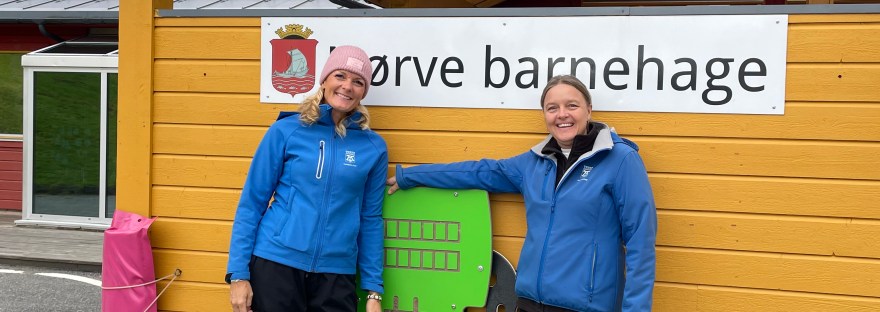
Nørve – the kindergarten of structure and warmth

At Nørve kindergarten we met a leader, equivalent to our Swedish principals, who showed how structure can create safety. Booklets and documents described everything from vision and goals to detailed organization of everyday life. Nørve’s motto is as simple as it is powerful:

“Care and learning – yes please, both!”

What impressed us most was the attention to everyday situations. Each morning begins with eye contact and smiles, making sure children feel seen. Meals become arenas for language, humor and conversation. Teachers use every moment to create opportunities for meaningful dialogue with the children.

Workplace well-being was also a priority. Staff have four hours each week set aside for planning and reflection, and every day starts with a joint meeting for teachers from all groups if possible, otherwise one teacher carries the information from others. Their “Ten rules” for a good work climate emphasized the importance of starting the day with a smile, appreciating colleagues and daring to give constructive feedback. Talking with each other, not about each other, is a central value at Nørve kindergarten.

The role of the adult – awareness in every meeting

We were impressed by their view of the adult role. “Our work in the kindergarten is mainly about the children,” said the material we received. Adults should be present, positive and clear, good role models who never speak down to children, parents or colleagues.

Setting limits is described as an important part of care, not as control but as a way to create safety and predictability. Staff are encouraged to use “I” statements: “I want you to sit down on the chair.” Clear, respectful and warm.

Even the instructions for substitutes carried the same clarity: be present, always greet, ask if you are unsure, and remember that you are an ambassador for the kindergarten. Details that may seem obvious, but show how carefully Nørve builds its culture.

Similarities and differences

In both Skåthaugen and Nørve, play and language development were central themes, something we recognize from our own work in Tortuna. But the differences compared to Sweden were clear:

  • Higher staff ratios gave better conditions for planning and reflection.
  • Meals: while in Sweden the clock often rules and we must be back in time for lunch, Norwegian children walked longer tours with packed meals. Four days a week they eat sandwiches, which also seems to give more time for adventure.
  • Freedom: children were allowed to try things on their own to a degree that is rare in Sweden, with all our safety rules.

Why children need risky play

At the end of our journey we had the privilege of listening to Charlotte Lunde, a doctor and child psychiatrist passionate about children’s mental health. She reminded us that children benefit from risky play. Research shows that climbing does not lead to more fractures and that rough-and-tumble play does not make children more aggressive. On the contrary, it strengthens courage, emotional regulation and self-confidence.

She also stressed that overprotective adults, both parents and preschools, risk preventing children from developing self-regulation. If we always remove risks, children never practice facing uncertainty, handling emotions and getting up when they fall.

Studies even show that adventurous play can reduce children’s anxiety. When children face challenges that are “just right,” they learn to cope with uncertainty – maybe the best investment in their future.

Our conclusion

We return home impressed by the Norwegian way of combining structure and freedom. Skåthaugen and Nørve showed different paths to the same goal: giving children safety, courage and joy in everyday life. In Sweden, we may need to talk more with principals, insurance companies and workplace authorities about not overprotecting children, because safety is not always the same as development.

Perhaps we also need to practice ourselves a little more: to dare to stay on the ground while the children climb higher. Who knows, maybe it is we adults who need the most training in self-regulation. During our trip it became clear that both Norway and Sweden want the best for children, but the way to get there looks different. Perhaps we Swedes can learn something from the Norwegian trust in children’s abilities.

So next time we see a child climbing a little higher than we are comfortable with, we might ask: is this dangerous, or is it learning?

Linnea Engblom and Josefine Nordberg Karlsson, Tortuna preschool Västerås

Västerås

A Study Visit to Finnish Preschools – Reflections and Inspiration

Helena Olofsson, a preschool teacher, and Anton Fagergren, an assistant principal, traveled from Västerås to visit preschools in Lahti, Finland, to gather inspiration and ideas for their own work back home in Sweden.

Our goal and focus

However, our goal was also to share our experiences on what we called sustainable education. Lahti is known for its environmental efforts and its passion for sports, particularly winter sports. Our focus was on pedagogical leadership, special education, learning environments, and sustainability issues.

Visited several preschools

Throughout the week, we visited several preschools and had the opportunity to participate in daily activities, gaining firsthand insight into a typical day in a Finnish preschool. We had the privilege of following both teachers, language instructors, and school leaders. As we toured the different preschool departments, we observed their methods, asked questions to the staff and leadership teams, and, most importantly, spent time in the heart of the educational setting together with the children during singing sessions, language gatherings, meals, and outdoor learning activcities.

One particularly striking aspect was Finland’s clear and structured system for assessing children’s needs. Based on these assessments, resources were allocated to support children with special needs. We noticed that Lahti placed significant emphasis on ensuring that preschools had access to special education teachers as part of their daily work, with most preschools having their own dedicated specialist. Additionally, Finnish preschools provide mother-tongue support in a way that differs from Sweden. Children with another mother tongue received extra training in Finnish, and we had the opportunity to observe such a session. It was fascinating to see how effectively they worked with language development using visual aids and storytelling.

Learning environments indoor and outdoor

Since we in Sweden have spent a great deal of time developing our learning environments, we paid special attention to this aspect. The learning environments in Finland were quite similar across the different preschools we visited. We understood that there were stricter guidelines regarding what educators could modify themselves, compared to the greater autonomy we are used to in Sweden. The classrooms and preschool settings were often equivalent and standardized, which could be seen as both a strength and an area for further development.

One fascinating detail was the strong emphasis on physical activity in Finnish preschools. Every preschool we visited had some form of sports area or physical activity space. One preschool had a huge indoor sports hall, another had access to a basement with a basketball court and soccer goals, while a third had a smaller space with a climbing wall and various balls. Some preschools even had ride-on toy cars for indoor use. Many classrooms were also equipped with ropes or climbing apparatus that could be attached to the ceiling, reinforcing the importance of movement in everyday activities. This strong presence of sports and movement is likely an influence of the athletic culture in Lahti, something that we definitely want to take with us as inspiration for our own work.

Outdoor environments also followed a relatively uniform design across all the preschools we visited. However, they were well-maintained and of high quality. Like in Sweden, many Finnish preschools frequently used the forest as a learning space, reinforcing the value of outdoor education.

New ideas and what we have learned

This visit has given us much to reflect on and a wealth of new ideas. It has been exciting to see how a neighboring country, so geographically close to Sweden, operates in ways that are both similar and very different in certain aspects.

Some other key takeaways from our visit:

  • In Finland, children nap or at least rest all the way up to preschool class.
  • There is a clearer division of tasks based on educational qualifications.
  • Preschool leaders also oversee preschool classes and have the flexibility to allocate staff across these groups.
  • Finland excels in the use of visual aids (picture support) in education!
  • Many Finnish educators take great pride in their work, and rightly so. However, this made us reflect on how we in Sweden should also celebrate and acknowledge the high quality of our own preschools, including those in Västerås.
  • Finland is currently facing a declining number of children in preschools, a challenge that we are in the middle as well. Perhaps this is an area where collaboration between countries could be beneficial?

Final words

A huge thank you to everyone we met during this journey! Your hospitality, knowledge, and dedication have been truly inspiring.

Anton and Helena

Västerås

Important exchange with our Nordic twin towns

For five days in September, I visited Lahti to job shadow two principals, get an insight into the Finnish preschool and exchange experiences with our Nordic twin towns Akureyri, Ålesund, Lahti and Randers. On this occasion Randers unfortunately did not have the opportunity to attend.

Meeting with the municipal management

My visit in Lahtis started with participating in a meeting with the municipal management. In the meeting, we got an insight into how preschool activities are organized in the city. There I met operational management and school principals. On the same day, I attended a preschool where I had the opportunity to shadow the management during the whole day. I also got to visit the preschool’s learning environments and participate in gatherings with the children. The preschool I visited was located in a socioeconomically vulnerable area and there were several children with neuropsychiatric disabilities and children of other origins.

Visit a preschool in the country

On the second day, me and two of my preschool teachers got to visit a preschool that was out in the country but with socio-economic stability. There we got to meet the principal who told us about how her work was organized at the preschool and how they work with sustainability. We got to visit all learning environments and meet children and staff. We also had the opportunity to visit the preschool class for which the preschool principal was responsible.

Organization and staff

During these days, I learned a lot about the organization of staff and how they optimize staffing at the preschools. We talked a lot about pedagogy and learning. I also had the opportunity to discuss the importance of children’s recovery in order to create the best learning possible. I was both strengthened and confirmed about the subject based on research. I was able to clearly see how the organization at the preschool enabled time for reflection and planning of the teaching, which in turn benefits children’s learning and development skills. The preschool teachers have the opportunity to plan the education and reflect both from home and at the preschool. They don’t work 40-hour weeks like we do in Sweden, and full-time work is about two hours less a week (scheduled).

Meals at the city’s preschools

I also gained insight into equivalence regarding meals at the city’s preschools. All preschools prepared food based on the same ingredients but it gets cooked under the influence of the unit’s chef. One of the preschools baked their own bread for lunch together with the children for teaching and educational purposes, but also based on joyful learning. It was also very interesting to study how the principal cooperated with her employees and I felt that they had a trusting relationship. The leadership felt clear and trustworthy.

Wonderfully well received

My colleagues and I were wonderfully well received by our hosts in Finland. It was a very well-planned program throughout our days. The preschools were well prepared and full of anticipation for our visits. The children were curious about us and some were fascinated that we had traveled so far to see their preschool and what they learned during the day. One of the children said: ”They have traveled across the ocean to meet us”.

The principals greeted us very well and I feel that we have formed bonds of friendship to see each other again and visit each other’s preschools and also talked about how to expand cooperation between the countries.

During the days, we mostly spoke English to each other, but our hosts also tried to speak Swedish with us, which was much appreciated. I take with me lots of new thoughts from our visits and I feel strengthened both in my leadership and in my mission as principal.

Insights and inspiration

The warm reception and the job shadowing in Lahti have given me insights and inspiration. I bring with me many good thoughts and experiences from our Finnish sister city that will benefit me in my leadership and in the development of teaching at the preschools. After my visit, I can see many similarities between our Nordic countries, and I feel a strong bond between the countries. Now more than ever.

Anna-Maria Barnelius
Principal, Västerås stad Skolverksamheter

Västerås

Experiences from Job Shadowing in Lahti – Kanervan and Ersta päiväkoti

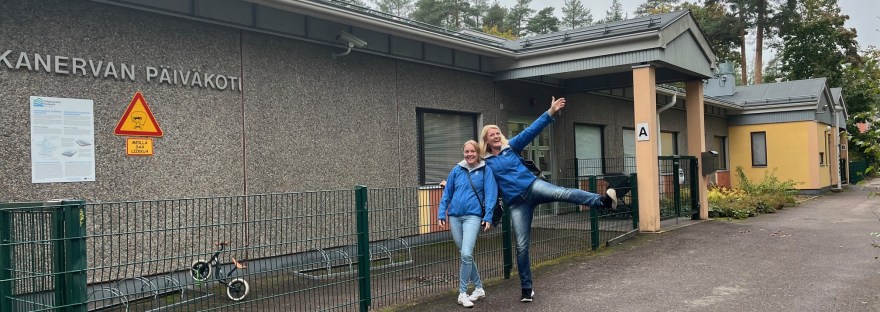
From the small village of Tortuna outside Västerås to the winter sports city of Lahti in southern Finland, we, two preschool teachers from Västerås, traveled. Together, we had the privilege of visiting and job shadowing at two preschools (Kanervan päiväkoti and Ersta päiväkoti) in connection with the twin city days in Lahti in September 2024. During these days, we gained insight into how sustainability and pedagogy are integrated into their activities, and we compared this with our own experiences from Swedish preschools. The report describes our observations and reflections, focusing on how Lahti works with the UN’s global sustainability goals and children’s participation.

Day 1 Kanervan päiväkoti

Our first day was spent at Kanervan päiväkoti, a relatively large preschool with six departments. Here, we participated in the children’s daily activities and saw how sustainability is a natural part of everyday life. The day began with the children serving themselves breakfast from a buffet cart, which both reduces food waste and strengthens the children’s independence. The reduction in food waste was due to the children learning not to take more than they could eat. They were not allowed to refill until everything previously taken was eaten. We could see that the children understood the reasons behind the rules, and mealtime was a pleasant part of the day.

During the day, we joined a forest excursion where the children explored the colors and sounds of nature. This served as an introduction to natural science and environmental awareness. We were impressed by how the children took great responsibility for their own materials and learned to use recycled materials in creative activities. A concrete example was the children’s participation in simple environmental efforts, such as learning about water and energy conservation. The educators talked about concepts like using ”a small river” (a small flow from the tap when washing hands).

Kanervan päiväkoti is also part of the Salpausselkä UNESCO Global Geopark, which clearly permeates the activities. The children were inspired by mascots they had created themselves to explore the geopark’s resources and nature. The educators explained how this initiative connects local environmental issues with the UN’s sustainability goals. We experienced a well-thought-out balance between the pedagogical responsibilities of the preschool teachers and the practical support of the childcare workers.

Day 2 Ersta päiväkoti

On our second day, we visited Ersta päiväkoti, where we talked with the principal while job shadowing her through the activities. In our dialogue with her, we gained a clearer picture of the differences and similarities between Swedish and Finnish preschools. We learned that Finland’s childcare is centrally governed through a national law and a relatively new common curriculum, aimed at creating consistent quality and stable funding across the country’s preschools. This is linked to the fact that all the preschools we visited had a high staff-to-child ratio.

We observed that all the preschools we visited in Lahti, including Kanervan and Ersta, worked with Vihreä lippu (Finland’s equivalent of Green Flag). It is a program that integrates sustainability into daily activities through children’s participation and practical projects. The preschools also consistently used visual aids in various activities to help children understand instructions and participate in common routines, contributing to an inclusive learning environment.

We also heard about Ersta’s sustainability work, where dental health was included as part of the broader goal of promoting good health as part of sustainable development. In Finland, all preschool children receive xylitol tablets after meals to promote dental health. This practice is part of Finland’s long-term efforts to improve children’s oral health and has become an established practice in preschools and schools. The principal explained that she purchases these tablets for all the children at the preschool. By giving xylitol tablets after meals, Finland combines dental care with education in good habits from an early age in preschools. This aims to reduce the need for dental care later in life and strengthen overall health.

Reflection and Lessons Learned

After our visit, we reflected on how Lahti’s preschools systematically work with sustainability, which inspires us to develop similar methods in our own activities. The clear connection between the local environment and global goals in pedagogy is something we want to bring to our own preschools. We see potential in applying some of Lahti’s methods in Västerås, such as recycling projects, increased focus on nature excursions, and using global goals as a guiding thread in teaching. At the same time, we can learn from the division of labor between pedagogical and practical staff that prevailed in Finland to create even better learning environments in Sweden.

Conclusion

The visit to Lahti has given us valuable insights and inspiration. By taking advantage of our experiences, we hope to develop our own activities with a focus on sustainability and children’s participation. We look forward to continuing our work to create an even more learning and sustainable preschool in Västerås.

Linnea Engblom and Josefine Nordberg Karlsson, Tortuna preschool, Västerås.

Västerås

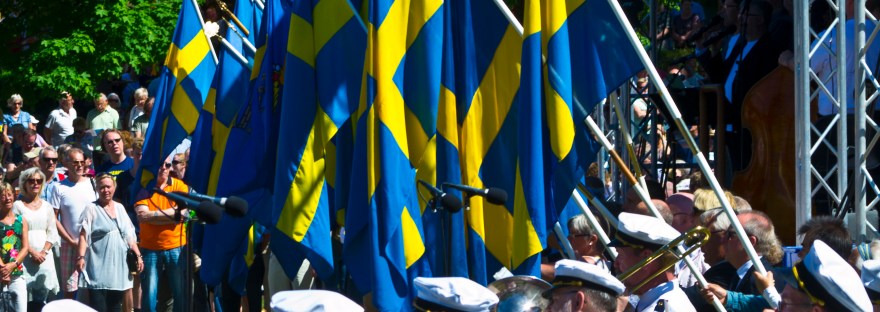
Den 6 juni firar vi Sveriges nationaldag

Foto: Mostphotos

Sveriges nationaldag och svenska flaggans dag firas den 6 juni varje år och är en helgdag i Sverige. Tidigare firades 6 juni enbart som ”svenska flaggans dag” och det var först 1983 som dagen även fick status som nationaldag. Sedan 1996 är nationaldagen en salutdag, och från och med 2005 är nationaldagen även en helgdag.

Nationaldagen firas dels till minne av att Gustav Vasa valdes till Sveriges kung den 6 juni 1523, dels till minne av att 1809 års regeringsform (som gällde fram till 1974 års regeringsform) skrevs under den 6 juni 1809.

Den 6 juni 1523 väljs Gustav Vasa till kung i Sverige. Det medförde att Sverige bröt sig ur Kalmarunionen med Danmark och Norge och åter blev ett självständigt land med en egen kung och en ny kunglig dynasti, Vasaätten. Den 6 juni 1809 skrev riksdagen under den regeringsform som lade grunden för det moderna Sverige.

Ända sedan 1893 har nationaldagen firats traditionsenligt på Skansen den 6 juni. Vi firar i närvaro av kungafamiljen och med musik, högtidstal och utdelning av fanor.
I de flesta län och kommuner firas nationaldagen med lokala evenemang och festligheter. Många kommuner har också en särskild ceremoni för att välkomna nya svenska medborgare och alla nya invånare i kommunen.

I Västerås firas nationaldagen traditionsenligt på Djäkneberget. Firandet inleds i stadshuset med välkomstceremoni för nyblivna svenska medborgare på förmiddagen. Därefter går den traditionsenliga fanborgen från Fiskartorget klockan 12.00, och marscherar tillsammans med Västerås Stadsmusikkår hela vägen upp till Djäkneberget. Västerås Youth Marching Band ansluter från Växhuset. Firandet avslutas på Djäkenberget klockan 15.30.

Vad kan man äta på Sveriges nationaldag? Något som blivit en tradition för nationaldagen är färskpotatis och sill, som är gamla traditionella råvaror. Dessa råvaror har för övrigt också egna dagar vid namn färskpotatisens och sillens dag.

Nationaldagsfirande på Djäkneberget – Västerås (vasteras.se)

NATIONALDAGEN HISTORIA – Stiftelsen Sveriges Nationaldag

Sveriges nationaldag | Lär dig mer om högtider | Nordiska museet

Västerås

Job shadowing in Iceland – an experience for life

Anna-Maria Barnelius and Malin Jansson, two principals from Västerås, were curious about how principals in preschools in Akureyri work. They traveled to Akureyri in September 2023 to exchange for a few days with Anna Lilja Sævarsdóttir, principal of Leikskólinn Iðavöllur, and Inda Björk Gunnarsdóttir, principal of Leikskólinn Kiðagil. They wanted to see similarities and differences in terms of leadership between the twin cities.

We visited two preschools

We visited two preschools and we got to participate in different classes and was able to observe the teachers in class. We also had the opportunity to participate and observe a special teacher who was working with a child with autism. And we also got to observe and interview two principals.

We got to look at the environments at the different preschools and the outdoors environments.

We discovered that Iceland map the children carefully

We discovered that in Iceland they map the individual children very carefully. It is a big difference to how we work in Sweden. It also has a curriculum that comes from the state, but the preschools also have their own plans that the principal controls.

Transitions: They have good contact with the school. You make a visit a month before the children are 5-year-olds, eat a snack at school, go to the library, meet last year’s children, meet the teachers who will receive them. They have access to the gymnasium, where they get to know the premises. Parents can choose a school in the area they want to place their child. The headmaster of the school can say yes or no to parents and the families living nearby go first.

When a guardian declines they must sign a paper

When a guardian is offered interventions and declines, they must sign a paper showing that they have declined the intervention. This is saved and can be retrieved by the receiving principal at the school or new preschool. This makes it easier to catch children who need special interventions and that you don’t have to start from scratch when the child starts in a new school form.

We also learned that there is a new law in Iceland which ensures that families cannot avoid receiving support from, for example, social services. It is the same confidentiality that applies throughout the school period.

It was very positive to learn more

It was very positive to meet two principals and to learn more about Iceland’s culture, traditions, food, education system, reception of new arrivals and much more. We can see that in Iceland they work very structured with children’s learning and development.

Both of us were impressed of how they work with putting the children’s well-being and learning in the front. All the teachers, principals and even the municipality seems to work together and that is wonderful to see.

Thank you so much

Thank you so much for hosting us and teaching us more about Icelandic preschool system and your culture! We felt very welcomed.

Anna-Maria Barnelius and Malin Jansson
Principals, Västerås stad Skolverksamheter

Västerås

Upplevelser av pandemin från föräldrarnas perspektiv

Under cirka 18 månader har vi och världen levt med coronapandemin. I slutet av september tog Sverige bort många restriktioner. Nu skulle livet och vardagen bli lite mer normal igen. En dag i oktober träffade jag två rektorer för att samtala om hur pandemin har påverkat barnen och föräldrarna i förskolan. Vi satte på oss föräldrarnas glasögon och funderade över vad som har fungerat bra och vad som har fungerat mindre bra samt vad vi tar med oss framåt.

Vad har fungerat bra?

– Vi har hittat bra rutiner vid hämtning och lämning för att hålla avstånd och undvika smittspridning. Vi har ringklockor på varje avdelning. Pedagogerna går ut i hallen och möter föräldrarna och barnen. Många föräldrar har sagt att det gör hämtningen och lämningen lättare och att det ger en bra möjlighet till att få och lämna information. Det blir ett kort men bra och personligt möte i hallen, säger Monica Rosén, rektor Gransångarens förskola och Knattekompaniets förskola.

– Hämtningen och lämningen blir smidigare för alla. Det skapar också lugn på avdelningen när barnen inte blir störda i sin lek av föräldrar som kommer och går, berättar Monica Rosén vidare.

– Jag instämmer. De nya rutinerna har varit uppskattade hos föräldrarna. De har upplevt att vi vill att deras barn ska må bra och att våra rutiner har bidragit till att minska smittspridningen i samhället, säger Erica Carlsson, rektor Erikslunds förskola och Norra Vallby förskola.

– En stor del av undervisningen har skett utomhus och även det har gjort att barnen och pedagogerna har varit friskare, berättar Erica Carlsson vidare.

Vad har fungerat mindre bra?

– Vi har haft många diskussioner om sjuka barn med föräldrar. Det är svårt för pedagogerna att avgöra vilka vi ska skicka hem och vissa barn är lite snuviga jämt, säger Monica Rosén.

– Många föräldrar är också rädda och oroliga över att vara hemma ofta med sjuka barn, då de kanske inte har en fast anställning och deras chefer klagar, berättar Monica Rosén vidare.

– Även här håller jag med. Vissa föräldrar har haft svårt att förstå Folkhälsomyndighetens och Smittskyddsenhetens rekommendationer om symtom på covid-19. Pedagogerna har lagt mycket kraft och tid på att förklara och motivera föräldrar att följa rekommendationerna, säger Erica Carlsson.

Vad tar vi med oss framåt?

  • Vi fortsätter att utveckla utomhuspedagogiken och ha stor del av undervisningen utomhus. Vi ser att barnen håller sig friskare då. Det blir också mer variation i de aktiviteter som vi erbjuder barnen.
  • Vi kommer att erbjuda både fysiska och digitala utvecklingssamtal, utifrån föräldrarnas önskemål.
  • När vi har möten med föräldrar i lokal försöker vi ha mötet i en större lokal, för att fortsätta hålla avstånd.
  • Vi fortsätter att tvätta händerna, stanna hemma när vi är sjuka och visa hänsyn.

Ta hand om er och varandra, så ses vi snart igen!
Hälsar vi från Västerås
genom Erica, Monica och Monika

Västerås

Med ny styrka och positiv inställning går vi in i 2021

Fredag den 12 mars 2020 reste sig cirka 40 rektorer på ledarforum och åkte tillbaka till sina förskolor för att möta upp personalens frågor och föräldrar som reagerade på att vi skickade hem deras barn, med anledning av pandemin. Därefter gick barn- och utbildningsförvaltningen in i stabsläge och började föra logg. Kommunala och fristående verksamheter får löpande information om corona-läget och olika insatser görs. När vi nu går in i 2021 är vi positiva och ser framåt.

Vi ser tillbaka på året som gått
Året 2020 blev inte alls som vi hade tänkt oss. Vi fick ställa om, ställa in, hitta nya vägar, höja farten, sänka farten och ibland pausa i vårt arbete. Det har inte bara varit negativt, det har också varit positivt.

Västerås stad går upp i stabsläge
Corona-pandemin har under året som gått präglat arbetet i barn- och utbildningsförvaltningen, bland annat för att förhindra smittspridningen. Västerås stad gick i mars upp i stabsläge och en krisledningsorganisation infördes på förvaltningen. Vi började föra logg och ge löpande information om corona-läget till våra kommunala och fristående verksamheter samt föräldrar. Olika insatser görs löpande, beroende på var vi befinner oss i pandemin.

Stabsläge är ett beredskapsläge där ledning och nyckelfunktioner samlas och utvärderar information, beredda att snabbt sätta igång verksamhet. Kommunen går upp i stabsläge med förhöjd beredskap vid allvarliga händelser, som en pandemi.

Genom att vara i en kris har vi lärt oss otroligt mycket om krisarbete. Krisen har gjort oss starkare.

Läs hela artikeln här, Med ny styrka och positiv inställning går vi in i 2021, på svenska